

The Day of Pentecost marked a dramatic turning point. The promised Holy Spirit was poured out, Peter preached the risen Christ, and about three thousand people responded to the gospel. But an important question remained unanswered.
Was this new covenant promise only for the Jewish people?
Jesus had told His apostles that they would be His witnesses in Jerusalem, Judea, Samaria, and eventually “to the remotest part of the earth” (Acts 1:8). Peter had also declared that the promise of the Holy Spirit was for those who were “far off” (Acts 2:39). But understanding those words in theory was one thing. Watching God welcome Gentiles into His people was another.
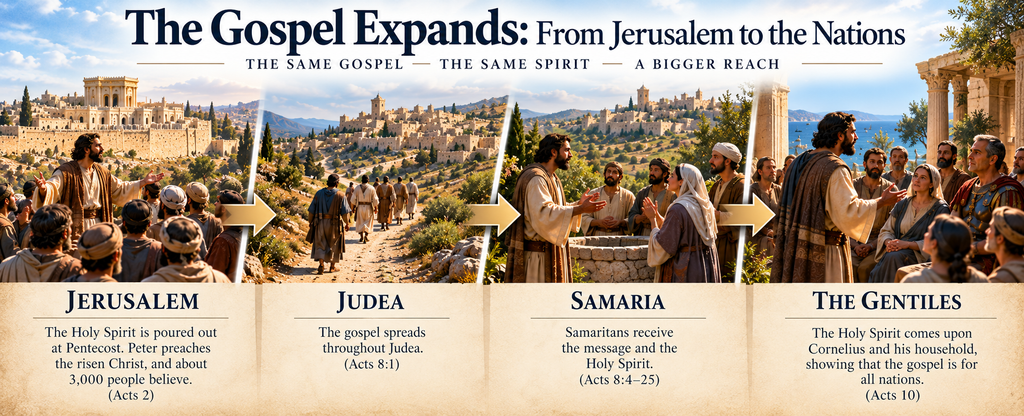
That is what makes the story of Cornelius in Acts 10 so important. The Holy Spirit came upon his household in a dramatic and unmistakable way, and the purpose was larger than Cornelius himself. God was teaching the early Jewish church something it needed to understand: the gospel of Jesus Christ was for the Gentiles too.
Who Was Cornelius?
Cornelius was a Roman centurion living in Caesarea. As an officer in the Roman military, he was part of the Gentile world that ruled Judea. Yet Luke describes him in unusually positive terms:
“A devout man and one who feared God with all his household, and gave many alms to the Jewish people and prayed to God continually.” (Acts 10:2)
Cornelius respected the God of Israel, prayed regularly, and generously helped people in need. But he was still a Gentile. He had not become part of the Jewish people. One day, while praying, Cornelius received a vision. An angel told him that his prayers and generosity had been noticed by God and instructed him to send men to Joppa to find a man named Simon Peter.
Cornelius immediately obeyed. But while his messengers were traveling toward Joppa, God was also preparing Peter.
Peter Had Something to Learn
Peter went onto the roof of the house where he was staying to pray. While there, he became hungry and fell into a trance. He saw something like a large sheet descending from heaven containing all kinds of animals.
Then a voice told him:
“Get up, Peter, kill and eat!” (Acts 10:13)
Peter objected because some of the animals were considered unclean under the Jewish dietary laws:
“By no means, Lord, for I have never eaten anything unholy and unclean.” (Acts 10:14)
The voice responded:
“What God has cleansed, no longer consider unholy.” (Acts 10:15)
This happened three times. Peter initially did not understand what the vision meant, but the answer was already approaching his door. The messengers sent by Cornelius arrived, and the Holy Spirit told Peter to go with them.
The vision was about more than food. God was preparing Peter to enter the home of a Gentile and to understand that he must no longer treat people God had accepted as unclean.
“God Is Not One to Show Partiality”
When Peter arrived in Caesarea, he found Cornelius waiting for him along with relatives and close friends. Cornelius had gathered people together because he expected Peter to bring them a message from God.
Peter acknowledged how unusual the situation was:
“You yourselves know how unlawful it is for a man who is a Jew to associate with a foreigner or to visit him; and yet God has shown me that I should not call any man unholy or unclean.” (Acts 10:28)
Peter was beginning to understand the meaning of his vision. God was breaking down a barrier that had deeply shaped Peter’s world.
After hearing how God had directed Cornelius to send for him, Peter declared:
“I most certainly understand now that God is not one to show partiality, but in every nation the man who fears Him and does what is right is welcome to Him.” (Acts 10:34 – 35)
Those words mark a major development in Acts. The gospel was moving beyond its Jewish beginnings and outward toward the nations.
Peter Preached Jesus
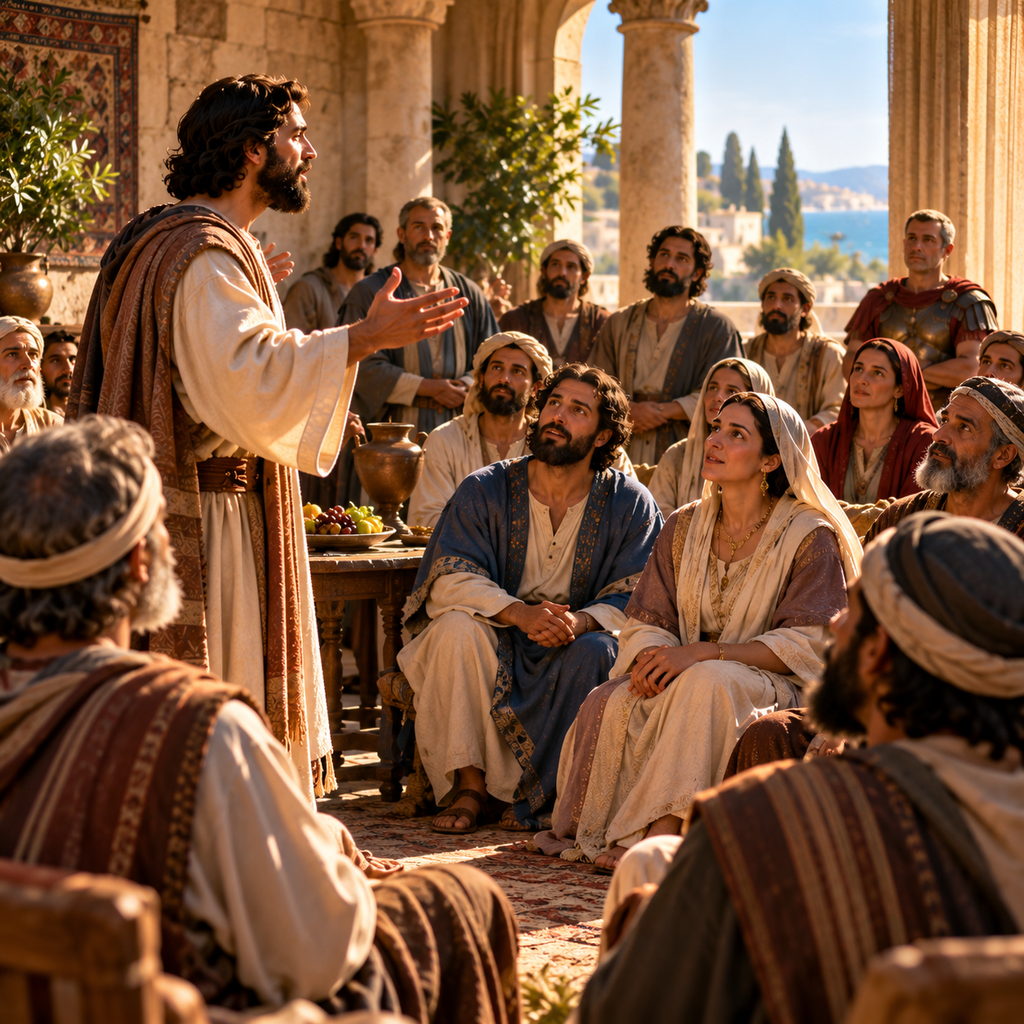
Just as Peter’s sermon at Pentecost centered on Jesus, his message to Cornelius did the same. He told them about Jesus’ ministry, His death, and His resurrection.
Peter declared:
“God raised Him up on the third day and granted that He become visible.” (Acts 10:40)
He explained that Jesus had been appointed by God as Judge and that the prophets testified about Him. Then Peter came to the heart of the gospel invitation:
“Of Him all the prophets bear witness that through His name everyone who believes in Him receives forgiveness of sins.” (Acts 10:43)
But before Peter even finished speaking, something extraordinary happened.
The Holy Spirit Interrupted the Sermon
Luke tells us:
“While Peter was still speaking these words, the Holy Spirit fell upon all those who were listening to the message.” (Acts 10:44)
This was not something Peter had planned. He had not reached the end of his sermon or invited anyone forward. God acted while Peter was still speaking.
The Jewish Christians who had traveled with Peter were astonished:
“All the circumcised believers who came with Peter were amazed, because the gift of the Holy Spirit had been poured out on the Gentiles also.” (Acts 10:45)
Why were they so amazed? Because these people were Gentiles. The Jewish believers were watching God give the Holy Spirit to people they had not expected to receive Him. And God made what was happening impossible to miss.
How Did They Know the Gentiles Had Received the Spirit?
The evidence was immediate:
“For they were hearing them speaking with tongues and exalting God.” (Acts 10:46)
This should sound familiar. At Pentecost, the coming of the Holy Spirit had been accompanied by miraculous speech. Now, in the home of a Gentile, Peter and the Jewish Christians witnessed a similar sign.
This was important because the event was not taking place privately. Jewish believers were there to witness it. God provided visible and audible evidence that the Gentiles had received the Holy Spirit.
The significance was unmistakable: the same God who had poured out His Spirit upon Jewish believers was now pouring out His Spirit upon Gentiles.
Peter Immediately Ordered Them to Be Baptized
Peter responded to what he had witnessed with a question:
“Surely no one can refuse the water for these to be baptized who have received the Holy Spirit just as we did, can he?” (Acts 10:47)
Then Luke tells us:
“And he ordered them to be baptized in the name of Jesus Christ.” (Acts 10:48)
Peter understood the miraculous outpouring of the Spirit as God’s confirmation that these Gentiles were to be welcomed. There was no reason to withhold baptism or treat them as outsiders. God had made His decision clear.
Peter Had to Explain Himself
We can see just how controversial this was when Peter returned to Jerusalem. News had spread that Gentiles had received the Word of God, and some Jewish believers criticized Peter:
“You went to uncircumcised men and ate with them.” (Acts 11:3)
Peter then carefully explained the entire story. He described his vision, the arrival of Cornelius’s messengers, the instruction of the Spirit, and what happened when he began preaching.
Then Peter made an important comparison:
“And as I began to speak, the Holy Spirit fell upon them just as He did upon us at the beginning.” (Acts 11:15)
Notice Peter’s reference point. He did not describe this as an ordinary occurrence, and it wasn’t. He looked back to what had happened “at the beginning” – Pentecost. The similarity mattered. God had provided Peter with unmistakable evidence that the Gentiles were being accepted on the same basis as the Jewish believers.
“Who Was I That I Could Stand in God’s Way?”
Peter then remembered Jesus’ promise:
“John baptized with water, but you will be baptized with the Holy Spirit.” (Acts 11:16)
His conclusion was simple:
“Therefore if God gave to them the same gift as He gave to us also after believing in the Lord Jesus Christ, who was I that I could stand in God’s way?” (Acts 11:17)
That question gets to the heart of the story. Peter was not deciding whether Gentiles were worthy of admission into God’s people. God had already acted. Peter’s responsibility was to recognize what God had done. When the believers in Jerusalem heard Peter’s explanation, their criticism stopped:
“When they heard this, they quieted down and glorified God, saying, ‘Well then, God has granted to the Gentiles also the repentance that leads to life.’” (Acts 11:18)
The lesson had been understood.
The Jerusalem Council Looked Back to Cornelius
The importance of this event did not end in Acts 11. Years later, the early church faced a major controversy over whether Gentile converts needed to be circumcised and required to keep the Law of Moses. The apostles and elders gathered in Jerusalem to consider the question. Peter again pointed back to what God had done among the Gentiles:
“And God, who knows the heart, testified to them giving them the Holy Spirit, just as He also did to us; and He made no distinction between us and them, cleansing their hearts by faith.” (Acts 15:8 – 9)
Years later, Cornelius’s household still stood as evidence in one of the most important theological debates faced by the early church. God had given the Holy Spirit to Gentiles. He had made no distinction between them and Jewish believers.
A Gentile Pentecost?
For this reason, the conversion of Cornelius is sometimes described as a kind of “Gentile Pentecost.” We should not push the comparison too far because the events are not identical, but there is a clear connection.
At Pentecost, Jewish believers received salvation while witnessing miraculous signs. In Cornelius’s household, Gentiles received salvation with similar miraculous signs. Peter himself connected the two events by saying that the Spirit fell upon the Gentiles “just as He did upon us at the beginning.”
The sign served an important purpose. It was not merely a private spiritual experience for Cornelius and his family. It was God’s public testimony to Peter and the Jewish believers that Gentiles were being welcomed into God’s people.
The gospel was truly for all nations.
God Made No Distinction
The story of Cornelius teaches us something much larger than the experience of one Roman centurion. It demonstrates the expanding reach of the gospel and the fulfillment of Jesus’ promise that His witnesses would carry the message beyond Jerusalem and Judea. The barriers were coming down. Jews and Gentiles would not need separate churches, separate gospels, or separate Holy Spirits. Paul would later write:
“For by one Spirit we were all baptized into one body, whether Jews or Greeks, whether slaves or free…” (1 Corinthians 12:13)
The same Spirit unites people from different nations, backgrounds, and social positions into one body in Christ.
That is why the coming of the Holy Spirit upon Cornelius mattered so much. God was showing Peter, the Jewish believers who accompanied him, and eventually the entire church that salvation through Jesus Christ was not restricted by ethnicity or nationality.
God had opened the door to the Gentiles.
But the stories of Pentecost and Cornelius also raise an important question about terminology. Peter told the crowd at Pentecost that those who repented and were baptized would “receive the gift of the Holy Spirit.” What exactly did he mean? Was he promising miraculous gifts like those seen at Pentecost, or was he describing something else?
That is where we turn next: What Is the “Gift of the Holy Spirit” in Acts 2:38?
Want to Go Deeper?
This article is adapted from my book, Understanding the Holy Spirit: A Scriptural Study Guide. If you’d like to explore the Holy Spirit in greater depth, including His indwelling presence, His work in our lives, the fruit of the Spirit, being filled with the Spirit, spiritual gifts, and much more, the complete study is available on Amazon.