

Is Satan real? Does he actually influence events in our world? Can he tempt Christians, deceive people, or interfere with their lives? And what does the Bible mean when it tells us to engage in spiritual warfare?
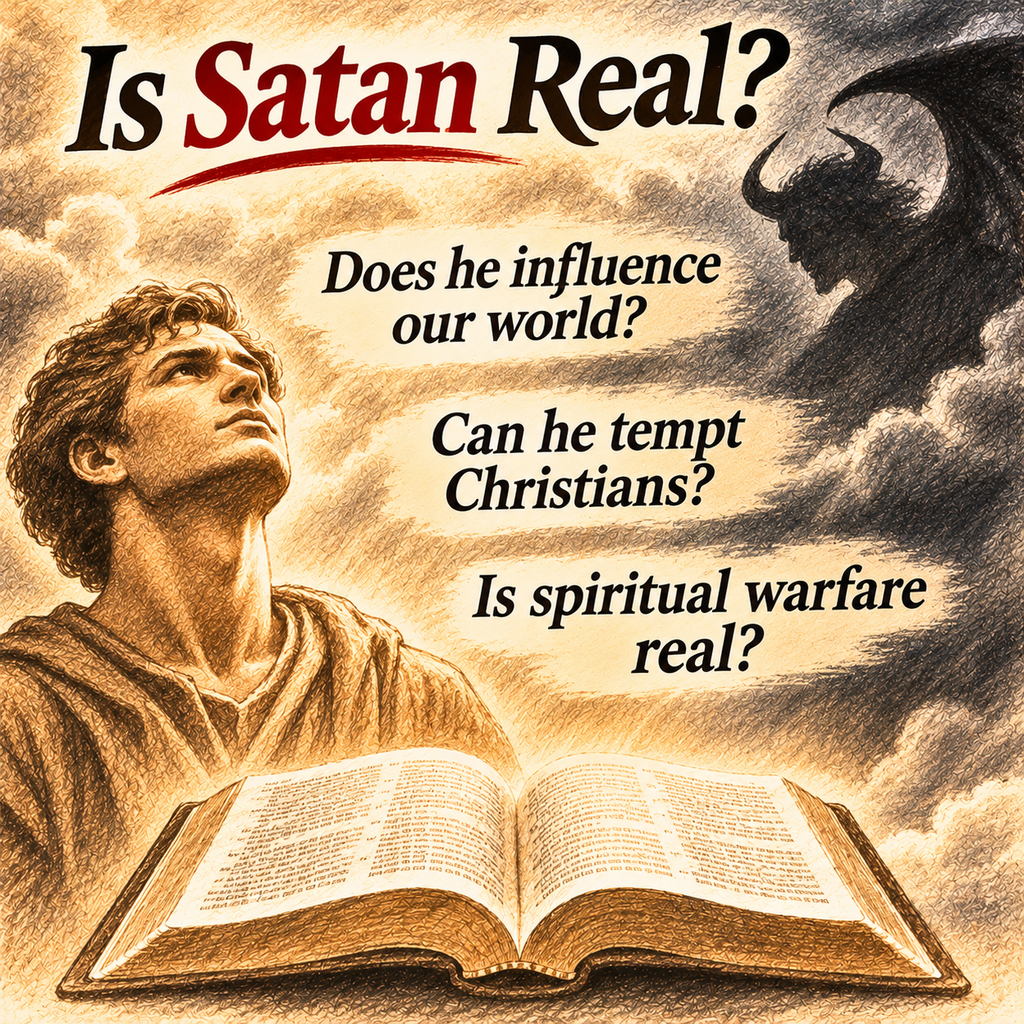
For many people, Satan is either a frightening supernatural figure or a fictional character used to symbolize evil. Popular entertainment often portrays him as a powerful ruler of darkness, locked in an endless struggle against God. Some Christians become deeply concerned about demonic activity, while others rarely consider the subject at all. But what does Scripture actually teach?
The Bible presents Satan as a real spiritual adversary who opposes God and seeks to deceive and destroy. Yet it also makes clear that Satan is not equal to God, does not possess unlimited power, and cannot overturn God’s ultimate purposes. Understanding these truths helps Christians take spiritual evil seriously without becoming fearful or fascinated by it.
Who Is Satan?
The name Satan comes from a Hebrew term meaning adversary or accuser. The New Testament also refers to him as the devil, a term associated with slander and false accusation. Scripture presents Satan as a personal spiritual being rather than merely an abstract symbol of evil. He speaks, deceives, tempts, and acts with deliberate opposition to God’s purposes.
In the opening chapters of Job, Satan appears as an accuser who challenges Job’s faithfulness (Job 1:6-12; 2:1-7). In the New Testament, Satan directly tempts Jesus in the wilderness (Matthew 4:1-11). Jesus described Satan’s character in especially strong terms:
“Whenever he speaks a lie, he speaks from his own nature, for he is a liar and the father of lies.” (John 8:44)
This statement identifies deception as a central feature of Satan’s activity. He opposes God’s truth and seeks to lead people away from it.
Where Did Satan Come From?
Scripture teaches that God created all things, including the invisible spiritual realm (Colossians 1:16). Satan therefore cannot be an eternal being existing independently of God. Several passages describe spiritual rebellion and divine judgment. Second Peter 2:4 refers to angels who sinned, while Jude 6 speaks of angels who abandoned their proper domain. Revelation 12:7-9 describes a conflict involving Michael and his angels against the dragon, who is identified as Satan.
These passages contribute to the biblical picture of spiritual rebellion, although they do not provide a complete chronological account of Satan’s origin.
Some Christians also connect Isaiah 14:12-15 and Ezekiel 28:12-17 with Satan’s fall. However, these passages explicitly address the king of Babylon and the ruler of Tyre, respectively. While some interpreters see a secondary reference to Satan, that interpretation should not be presented as an uncontested explanation of his origin.
The essential truth is that Satan is a created being who has rebelled against God. He is neither divine nor equal to the Lord in power or authority.
What Does Satan Actually Do?
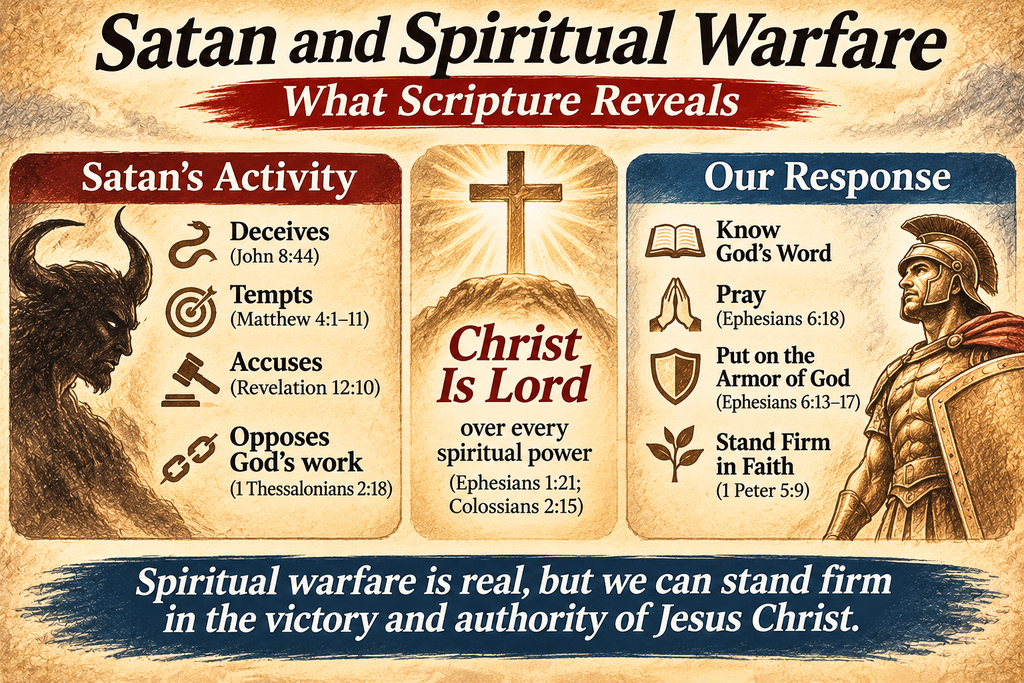
The New Testament describes several ways Satan opposes God’s purposes. His activities include deception, temptation, accusation, and efforts to hinder the spread of the gospel.
Deception. Jesus identified Satan as a liar and the father of lies (John 8:44). Paul also warned that Satan disguises himself as an angel of light (2 Corinthians 11:14). His methods may not always appear evil. False teaching and distorted truth can be especially dangerous because they may appear attractive or convincing.
Temptation. Satan tempted Jesus in the wilderness, attempting to persuade Him to act contrary to the Father’s will (Matthew 4:1-11). Paul also warned Christians about Satan’s efforts to tempt them (1 Corinthians 7:5).
Accusation. Satan appears as an accuser in Job, and Revelation 12:10 describes the accuser of God’s people. His opposition includes efforts to condemn and undermine those who belong to God.
Opposition to the gospel. In the parable of the sower, Jesus explained that Satan takes away the word from those who hear it but do not receive it (Mark 4:15). Paul also described Satan as hindering his ministry plans (1 Thessalonians 2:18).
These passages show that Satan’s activity is primarily directed against God’s truth, God’s people, and God’s redemptive purposes.
Can Satan Control Our Thoughts?
Christians sometimes wonder whether Satan can read their minds or directly control their thoughts. Scripture does not clearly teach that Satan possesses the ability to read every human thought. God’s knowledge is unlimited, but Satan is a created being with finite abilities.
The Bible does describe Satan influencing human decisions and actions. For example, Luke 22:3 states that Satan entered Judas as Judas arranged to betray Jesus. Acts 5:3 records Peter asking Ananias “why Satan had filled his heart to lie to the Holy Spirit”.
These accounts demonstrate that Satan can exert influence, but they do not explain every mechanism through which that influence occurs. We should therefore avoid claiming more than Scripture reveals. Not every unwanted thought, temptation, or troubling emotion should be attributed directly to Satan. James explains that temptation arises from our own desires:
“But each one is tempted when he is carried away and enticed by his own lust.” (James 1:14)
Recognizing our own responsibility is an important part of spiritual maturity. Christians must resist both external temptation and the sinful desires that arise within us.
What Is Spiritual Warfare?
The expression spiritual warfare describes the Christian’s struggle against spiritual evil and the influences that oppose God’s purposes. Paul provides one of the clearest explanations in Ephesians 6:12. He teaches that our struggle is not merely against human opponents, but against spiritual forces of wickedness.
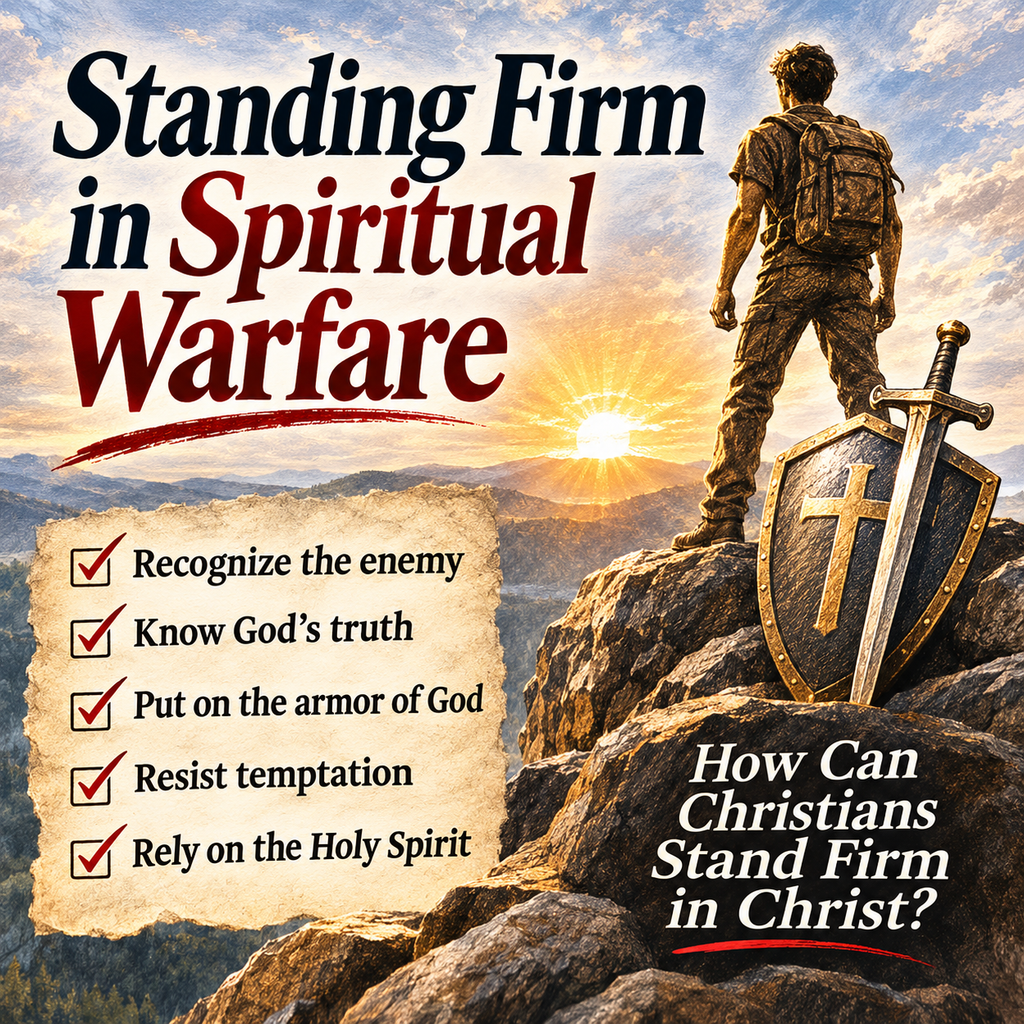
This does not mean that every difficulty in life is caused by Satan or demons. Christians face opposition from the world, temptations arising from their own desires, and the ordinary hardships of living in a fallen creation. Paul’s central instruction is to stand firm in the strength of the Lord. He does not encourage believers to search for demons behind every problem or develop elaborate rituals for confronting unseen beings.
Instead, he tells Christians to put on the full armor of God.
The Armor of God
In Ephesians 6:13-17, Paul uses the equipment of a Roman soldier to illustrate the spiritual resources God provides His people.
The belt of truth. Christians must be grounded in God’s truth rather than allowing deception to shape their beliefs and decisions. Since Satan is described as a liar, truth is an essential defense against his schemes.
The breastplate of righteousness. Believers are called to live in obedience to God, reflecting the righteousness that characterizes their new life in Christ.
The preparation of the gospel of peace. Christians stand firmly upon the good news of reconciliation with God through Jesus Christ. The gospel provides the foundation for their confidence and readiness.
The shield of faith. Paul describes faith as protection against the flaming arrows of the evil one. Trusting God’s promises helps believers withstand temptation, deception, and spiritual opposition.
The helmet of salvation. Salvation provides confidence in what God has accomplished through Christ. Christians belong to Him and can stand secure in His saving work.
The sword of the Spirit. Paul identifies this as the Word of God. Scripture equips believers to recognize falsehood, resist temptation, and remain faithful to God’s revealed will.
These elements are not magical objects or supernatural formulas. They describe the practical realities of a life grounded in God’s truth, righteousness, faith, salvation, and Word.
The Sword of the Spirit: God’s Word
One particularly important element of the armor is the sword of the Spirit.
“And take the helmet of salvation, and the sword of the Spirit, which is the word of God.” (Ephesians 6:17)
Notice the connection between the Holy Spirit and God’s Word. The Spirit is not presented as giving Christians a mysterious weapon that operates independently of Scripture. Instead, the Word of God is central to their spiritual defense. Jesus demonstrated the importance of Scripture when Satan tempted Him in the wilderness. In response to each temptation, Jesus appealed to what God had already revealed (Matthew 4:1-11).
His example teaches us that spiritual resistance is rooted in knowing and obeying God’s Word. This is one reason studying Scripture is so important. Christians who understand biblical truth are better equipped to recognize deception and resist teachings that contradict God’s revelation.
Prayer and Dependence on God
After describing the armor of God, Paul instructs believers to pray:
“With all prayer and petition pray at all times in the Spirit, and with this in view, be on the alert with all perseverance and petition for all the saints.” (Ephesians 6:18)
Prayer is an essential part of the Christian’s response to spiritual opposition. It expresses our dependence upon God rather than confidence in our own strength. Praying in the Spirit should be understood in harmony with the Spirit’s work in believers. Christians approach God through Jesus Christ, relying upon the Spirit’s presence and help as we pray according to God’s will.
Paul’s emphasis is not on special techniques, dramatic confrontations, or secret spiritual knowledge. He calls Christians to persistent prayer, spiritual alertness, and concern for fellow believers.
How Should Christians Resist Satan?
James gives one of the clearest instructions in Scripture:
“Submit therefore to God. Resist the devil and he will flee from you.” (James 4:7)
The order is important. Submission to God comes first. Resistance to Satan flows from a life committed to God’s authority and truth. Peter provides similar instruction:
“But resist him, firm in your faith, knowing that the same experiences of suffering are being accomplished by your brethren who are in the world.” (1 Peter 5:9)
Neither passage instructs ordinary Christians to seek direct confrontations with Satan. Instead, believers are told to resist him through steadfast faith and obedience to God. This includes rejecting false teaching, refusing temptation, cultivating godly character, and remaining committed to Scripture.
Spiritual warfare is therefore closely connected to the everyday Christian life. Standing firm in faith, telling the truth, resisting sinful desires, praying faithfully, and obeying God’s Word are all part of resisting spiritual evil.
Should Christians Speak Directly to Satan or Demons?
Some Christian traditions encourage believers to address Satan directly, issue commands to demons, or perform particular spiritual warfare rituals. Scripture records Jesus casting out demons and granting authority to His apostles and other disciples during His earthly ministry. These events demonstrate Christ’s authority over evil spirits.
However, the New Testament’s general instructions to Christians emphasize submission to God, resistance to temptation, prayer, faith, and obedience rather than direct conversations with Satan. Jude offers a noteworthy example. When describing a dispute between Michael the archangel and the devil, Jude writes that Michael did not pronounce a railing judgment against him but said:
“The Lord rebuke you!” (Jude 9)
Whatever questions remain about the details of this account, it illustrates the importance of recognizing the Lord’s authority rather than presuming upon our own. Christians should therefore be cautious about practices that claim special authority or techniques not clearly taught in Scripture.
Can Satan Defeat God’s Purposes?
Although Satan is a genuine adversary, the Bible never presents him as God’s equal. Jesus Christ possesses authority over all creation, including every spiritual power. Paul writes that God raised Christ from the dead and seated Him at His right hand:
“Far above all rule and authority and power and dominion, and every name that is named, not only in this age but also in the one to come.” (Ephesians 1:21)
The New Testament also describes Christ’s victory over the powers of evil through His death and resurrection (Colossians 2:15). Satan’s activity is real, but it is limited. His opposition cannot overturn God’s ultimate plan of redemption. Revelation 20:10 describes Satan’s final judgment, demonstrating that evil will not continue indefinitely or triumph over God. Christians can therefore approach spiritual warfare with confidence in Christ rather than fear of Satan.
How Does the Holy Spirit Help Us Stand Firm?
The Holy Spirit plays an essential role in strengthening Christians to remain faithful to God. Paul prayed that believers would be strengthened through the Spirit:
“That He would grant you, according to the riches of His glory, to be strengthened with power through His Spirit in the inner man.” (Ephesians 3:16)
The Spirit strengthens believers inwardly as they grow in faith and obedience. He also produces the character qualities described as the fruit of the Spirit, including love, joy, peace, patience, kindness, goodness, faithfulness, gentleness, and self-control (Galatians 5:22-23). These qualities are directly relevant to spiritual warfare. A Christian who grows in truth, self-control, faithfulness, and obedience is better equipped to resist temptation and deception.
Paul also instructs believers to walk by the Spirit rather than fulfill the desires of the flesh (Galatians 5:16). The Spirit’s work is therefore not primarily about extraordinary spiritual encounters. It is about strengthening believers to live faithfully according to God’s will. We will examine this ministry more closely in our next article, which focuses specifically on how the Holy Spirit helps Christians in spiritual battles.
Standing Firm Without Fear
The Bible presents Satan as a real spiritual adversary who deceives, tempts, accuses, and opposes God’s purposes. Christians should take these warnings seriously, but they should not become preoccupied with Satan or live in fear of his activity.
Scripture provides clear instructions for spiritual resistance. Believers are to submit to God, stand firm in faith, know His Word, pray continually, reject deception, and resist temptation. Our confidence rests in Jesus Christ, who possesses supreme authority over every spiritual power. The Holy Spirit strengthens believers to remain faithful, while God’s Word provides the truth needed to recognize and resist evil.
Spiritual warfare is not primarily about confronting demons. It is about standing firm in Christ, resisting evil, and remaining faithful to God’s truth.
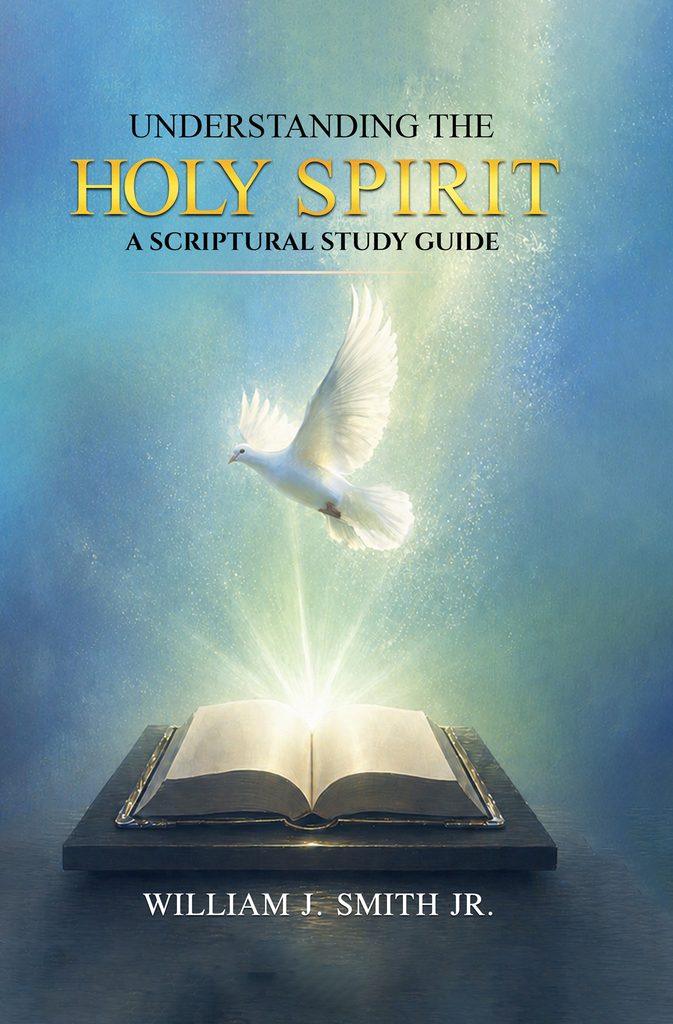
In our next article, we will examine how the Holy Spirit strengthens and equips Christians for this struggle.
Want to Go Deeper?
This article is adapted from my book, Understanding the Holy Spirit: A Scriptural Study Guide. In addition to going deeper in discussions of the spiritual realm, the book explores the identity and work of the Holy Spirit, His indwelling presence, His role in spiritual transformation, the fruit of the Spirit, spiritual gifts, and the importance of grounding our beliefs in Scripture.
Get Understanding the Holy Spirit on Amazonhttps://www.amazon.com/dp/B0H613J4G2