

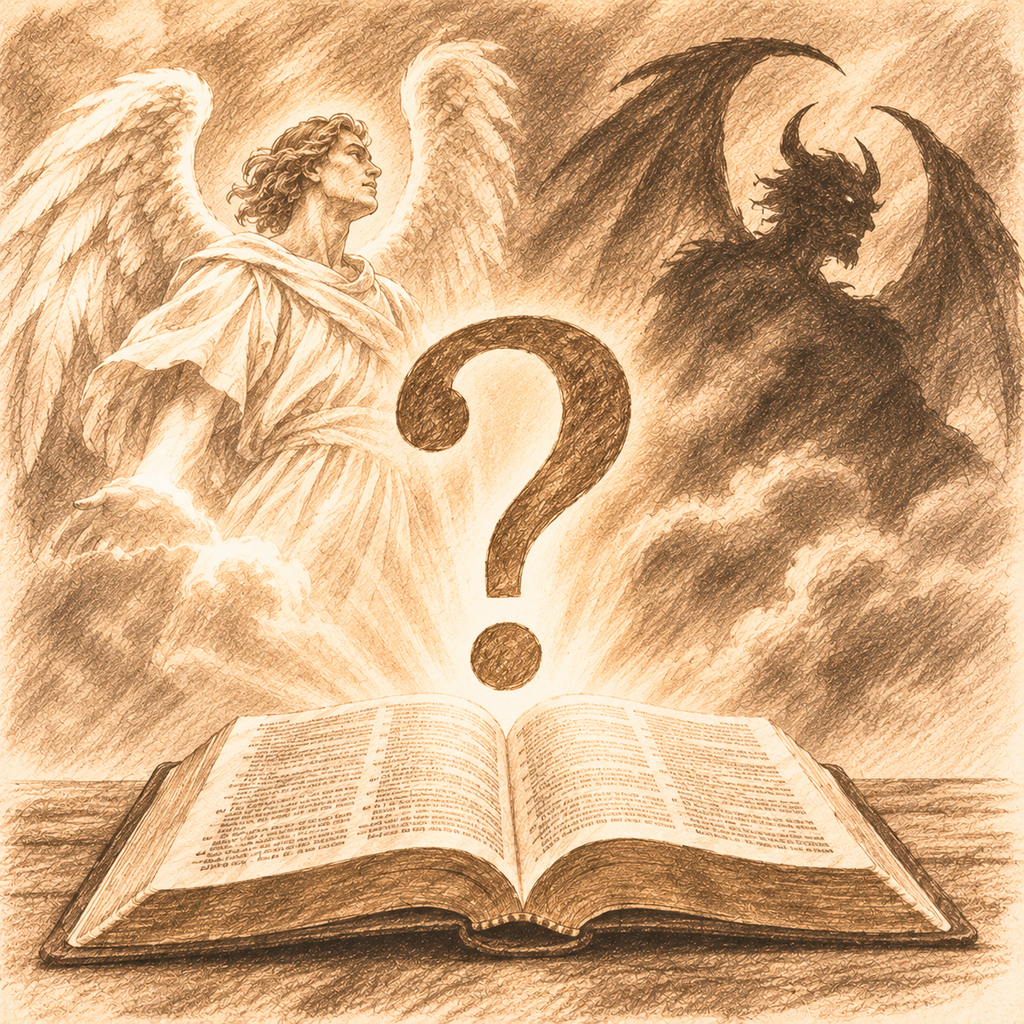
Angels and demons have fascinated people for centuries. Books, movies, religious traditions, and personal accounts have created countless images of these mysterious beings. Angels are often portrayed as beautiful guardians with wings, while demons appear as terrifying creatures possessing extraordinary supernatural powers.
But how much of this comes from Scripture? What does the Bible actually tell us about angels and demons? Are they real beings? What do they do? How much power do they possess? And how should Christians respond to their existence?
The Bible provides clear answers to some of these questions, while leaving others unexplained. Our responsibility is to distinguish what God has revealed, rather than take our beliefs from traditions, assumptions, and speculation.
Angels Are Created Spiritual Beings
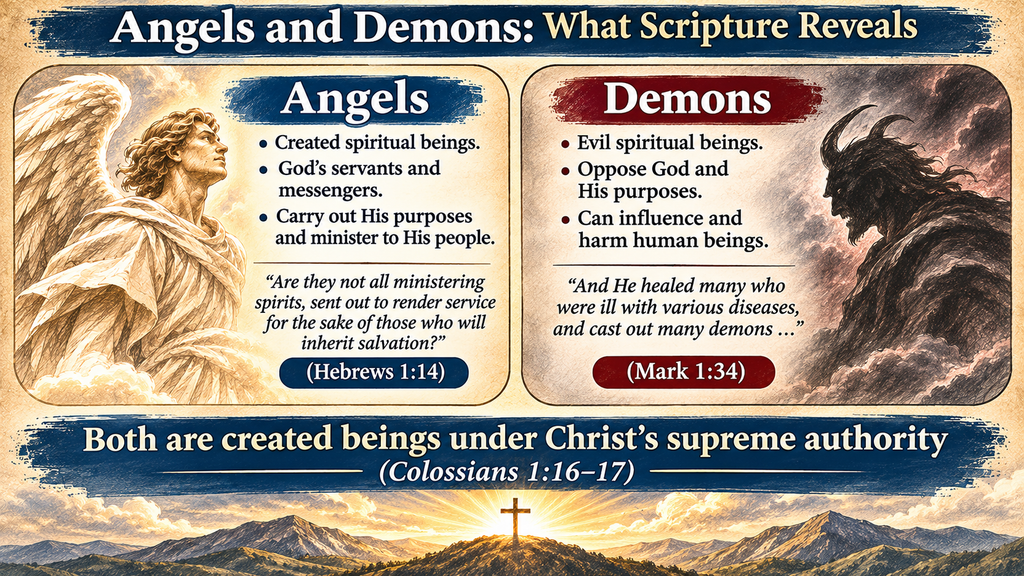
The Bible presents angels as real spiritual beings created by God. They are not divine, eternal, or independent of their Creator. Like everything else in the visible and invisible creation, they owe their existence to Him. Paul writes about Jesus Christ:
“For by Him all things were created, both in the heavens and on earth, visible and invisible, whether thrones or dominions or rulers or authorities – all things have been created through Him and for Him.” (Colossians 1:16)
This passage establishes that spiritual beings belong to the created order. Whatever authority or power they possess exists under the supreme authority of Jesus Christ. Angels are also described as spirits who serve God’s purposes:
“Are they not all ministering spirits, sent out to render service for the sake of those who will inherit salvation?” (Hebrews 1:14)
The word translated angel comes from the Greek word angelos, meaning messenger. This reflects one of their important functions, although Scripture describes angels performing other tasks as well. Angels are not deceased human beings who have entered a higher state of existence, though many believe this. Scripture distinguishes human beings from angels, and it does not teach that people become angels when they die.
What Do Angels Do?
Throughout Scripture, angels appear as servants carrying out God’s instructions. Their activities include delivering messages, providing assistance, executing divine judgments, and participating in worship before God’s throne. For example, the angel Gabriel appeared to Mary and announced that she would give birth to Jesus (Luke 1:26-38). An angel appeared to Joseph in a dream and instructed him to take Mary as his wife (Matthew 1:20-21). Angels announced the resurrection of Jesus to the women who visited His tomb (Luke 24:1-7).
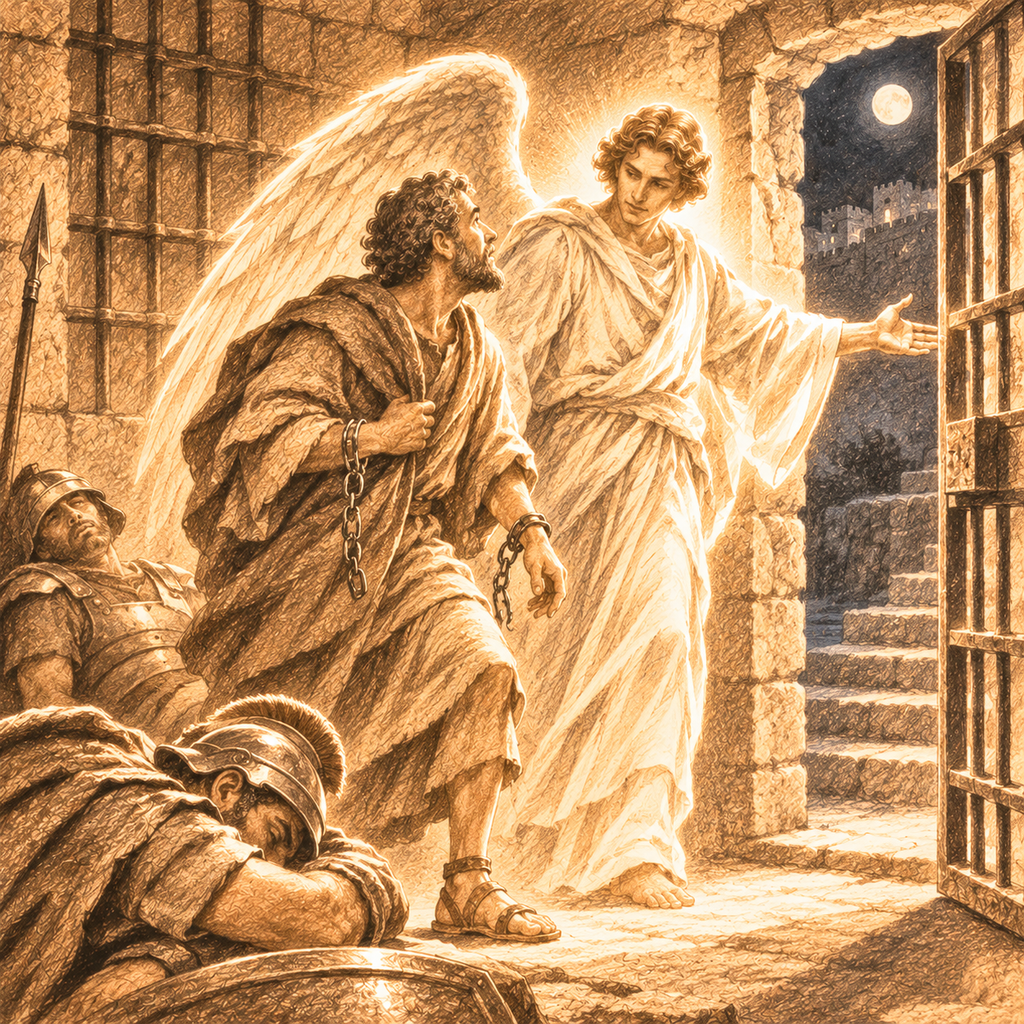
Angels also provided assistance to God’s servants. After Peter was imprisoned, an angel led him out of prison (Acts 12:6-11). Following Jesus’ temptation in the wilderness, angels came and ministered to Him (Matthew 4:11). Other passages describe angels participating in God’s judgments. In Acts 12:23, an angel of the Lord struck Herod because he failed to give glory to God.
These examples demonstrate that angels act according to God’s purposes. Scripture does not portray them as independent supernatural beings deciding for themselves how to manage human affairs.
Do Angels Have Wings?
Popular artwork almost always depicts angels with large feathered wings. But the biblical picture is more complicated.
Scripture describes certain heavenly beings, such as cherubim and seraphim, as having wings. Isaiah saw seraphim with six wings in his vision of God’s throne (Isaiah 6:2). Ezekiel also described extraordinary winged creatures in his visions (Ezekiel 1:5-11; 10:1-22). However, many biblical accounts of angels appearing to human beings do not mention wings at all. In some instances, angels appeared in human form and were not immediately recognized as heavenly messengers.
Hebrews offers an intriguing reminder:
“Do not neglect to show hospitality to strangers, for by this some have entertained angels without knowing it.” (Hebrews 13:2)
We should therefore avoid assuming that every angel looks like the familiar winged figures found in religious paintings. Scripture gives us some descriptions, but it does not provide a universal physical appearance for angels.
Are There Different Kinds of Angels?
The Bible identifies several kinds of heavenly beings and uses different titles in describing them.
Cherubim appear in several important passages. After Adam and Eve were expelled from Eden, cherubim guarded the way to the tree of life (Genesis 3:24). Their images also appeared above the mercy seat on the Ark of the Covenant (Exodus 25:18-22).
Seraphim appear in Isaiah’s vision of God’s throne. They worshiped the Lord, proclaiming His holiness (Isaiah 6:1-3).
Michael is specifically called an archangel in Jude 9. He is also described in Daniel 12:1 as a great prince who stands guard over Daniel’s people.
Gabriel appears as a messenger who communicates important revelations. He explained a vision to Daniel (Daniel 8:16) and later announced significant events surrounding the births of John the Baptist and Jesus (Luke 1:19, 26-38).
These passages demonstrate variety among heavenly beings. However, Scripture does not provide a complete organizational chart of the angelic realm. Elaborate classifications and hierarchies developed in later religious traditions often go beyond what the biblical text establishes.
Should Christians Pray to Angels?
Although angels are powerful servants of God, Scripture never instructs Christians to pray to them or worship them. In Revelation, John was so overwhelmed by what he had witnessed that he fell down to worship the angel who had shown him these things. The angel immediately corrected him:
“Do not do that. I am a fellow servant of yours and of your brethren the prophets and of those who heed the words of this book. Worship God.” (Revelation 22:9)
The instruction is unmistakable. Angels are servants, not objects of worship. Paul also warned Christians against becoming involved in the worship of angels (Colossians 2:18). His concern was that such practices could distract believers from their relationship with Christ.
Christians may thank God for His care and protection, including assistance He may provide through angels. But our prayers and worship should be directed to God, not to His created servants.
What Are Demons?
The New Testament describes demons as evil spiritual beings who oppose God and harm human beings. Jesus repeatedly encountered people afflicted by demons and demonstrated His authority by casting them out. Mark records:
“And He healed many who were ill with various diseases, and cast out many demons; and He was not permitting the demons to speak, because they knew who He was.” (Mark 1:34)
Demons are not presented merely as symbols of evil or as impersonal forces. In the Gospel accounts, they demonstrate awareness, speak, recognize Jesus, and respond to His commands. For example, when Jesus encountered a demon-possessed man in the synagogue at Capernaum, the unclean spirit recognized Him as the Holy One of God (Mark 1:23-26). These accounts establish that the biblical writers understood demons to be real spiritual beings.
Where Did Demons Come From?
This is an important question, but we should recognize that Scripture does not provide a complete account of the origin of demons. The New Testament describes angels who sinned and were subjected to divine judgment:
“For if God did not spare angels when they sinned, but cast them into hell and committed them to pits of darkness, reserved for judgment…” (2 Peter 2:4)
Jude also refers to angels who abandoned their proper domain and are kept for judgment (Jude 6). These passages establish that some angels rebelled against God. Many Christians understand demons to be fallen angels associated with Satan’s rebellion. This is a reasonable interpretation, although Scripture does not explicitly identify every demon mentioned in the Gospels with the angels described in these judgment passages. Logically, this makes some sense, since God is not the author of evil. In other words, all that He creates is good, so the rebellion of these creatures seems to have happened after their creation.
Revelation 12:7-9 describes a conflict involving Michael and his angels against the dragon and his angels. The dragon is identified as Satan. However, interpreters differ regarding the timing and symbolism of this passage, so we should be cautious about using it to construct a detailed chronology of Satan’s original rebellion.
The central truth is clear: evil spiritual beings exist, they oppose God, and they are ultimately subject to His judgment.
What Can Demons Actually Do?
The Gospel accounts demonstrate that demons can exert harmful influence over human beings. Some individuals experienced severe physical or behavioral disturbances associated with demonic activity, and Jesus delivered them through His authority. However, Scripture does not teach that every illness, emotional struggle, unusual behavior, or personal difficulty is caused by demons. Matthew makes an important distinction when describing Jesus’ ministry:
“They brought to Him all who were ill, those suffering with various diseases and pains, demoniacs, epileptics, paralytics; and He healed them.” (Matthew 4:24)
The passage distinguishes demonic affliction from other medical conditions. This matters because Christians should not automatically attribute physical illness, psychological suffering, or unexplained experiences to spiritual beings. Neither should we assume that demons possess unlimited power. They are created beings, not divine beings. They cannot rival God’s authority.
In the Gospels, Jesus commands demons, and they obey Him. Their recognition of His authority is one of the clearest demonstrations of His supremacy over the spiritual world.
Can Demons Know the Future or Read Our Minds?
Popular stories often attribute extraordinary knowledge to demons, including the ability to read human thoughts or predict future events with certainty. Scripture does not establish that demons possess these abilities.
Demons sometimes demonstrated knowledge of Jesus’ identity. In Mark 1:24, an unclean spirit identified Him as the Holy One of God. In Acts 16:16-18, Paul encountered a slave girl who had a spirit of divination and whose fortune-telling brought profit to her owners. These passages demonstrate that spiritual deception and claims of supernatural knowledge were present in the biblical world. However, they do not prove that demons possess God’s omniscience or His ability to know the future perfectly.
God alone possesses unlimited knowledge. Created spiritual beings, however powerful they may be, remain finite creatures. We should therefore avoid assigning abilities to demons that Scripture does not clearly establish.
Are Christians Supposed to Fear Demons?
The Bible takes spiritual evil seriously, but it does not encourage Christians to live in fear of demons. James gives believers a straightforward instruction:
“Submit therefore to God. Resist the devil and he will flee from you.” (James 4:7)
Notice that the command begins with submission to God. Christian resistance to evil is grounded in obedience and dependence upon the Lord. Peter similarly instructs believers to resist the devil, remaining firm in their faith (1 Peter 5:8-9). Neither passage tells Christians to become obsessed with identifying demons or to interpret every hardship as evidence of demonic activity.
Instead, believers are called to remain spiritually alert, faithful, and grounded in God’s truth.
What About Guardian Angels?
Many Christians believe that each person has a specific guardian angel assigned to protect them. Does Scripture actually teach this? Jesus made an interesting statement concerning children:
“See that you do not despise one of these little ones, for I say to you that their angels in heaven continually see the face of My Father who is in heaven.” (Matthew 18:10)
This passage suggests a special relationship between angels and God’s care for His people. Hebrews 1:14 also describes angels as ministering spirits sent to serve those who will inherit salvation. However, neither passage explicitly states that every individual has one particular angel permanently assigned to them.
Scripture gives us reason to believe that God uses angels in caring for His people, but it does not explain all the details of how that ministry operates. Our confidence should rest in God’s protection, not in assumptions about the number or identity of angels assigned to us.
Angels, Demons, and the Holy Spirit
Because this series focuses on the Holy Spirit, we should emphasize a distinction that is sometimes overlooked. Angels and demons are created spiritual beings. The Holy Spirit is eternal God. He is not an angel, a spiritual intermediary, or a supernatural force competing with other spirits. He possesses divine authority and participates in God’s work of redemption.
When Jesus cast out demons, He connected His authority over evil spirits with the arrival of God’s kingdom:
“But if I cast out demons by the Spirit of God, then the kingdom of God has come upon you.” (Matthew 12:28)
This statement is particularly significant. Jesus’ authority over demons was not evidence of one spiritual power competing against another on equal terms. It demonstrated the superior authority of God’s kingdom. The Holy Spirit’s ministry in believers is likewise directed toward God’s purposes. He strengthens Christians, produces spiritual fruit, and works in our transformation into Christlikeness.
Our attention should therefore remain focused on the Spirit’s work of making us more like Christ rather than on speculation about the activities of angels and demons.
What Should Christians Remember?
The Bible presents angels and demons as real spiritual beings, but it also establishes important boundaries for our understanding.
Angels are created servants of God who carry out His purposes. They may deliver messages, provide assistance, participate in divine judgments, and worship before His throne. Yet they are never to be worshiped or treated as independent sources of spiritual authority. Demons are evil spiritual beings who oppose God and His purposes. Scripture records their harmful activities, particularly during Jesus’ earthly ministry. Nevertheless, their power is limited, and they remain subject to Christ’s authority.
There is much about the spiritual world that God has not revealed. We should resist the temptation to fill those gaps with speculation, religious traditions, or sensational stories.
The central message of Scripture is not that angels and demons possess extraordinary powers, but that Jesus Christ is Lord over every created spiritual being.
In our next article, we will examine Satan more closely and explore what Scripture teaches about spiritual warfare, including how Christians are instructed to resist the devil and stand firm in their faith.
Want to Go Deeper?
This article is part of our continuing study of the Holy Spirit and the spiritual world, adapted from my book, Understanding the Holy Spirit: A Scriptural Study Guide. The book explores the identity and work of the Holy Spirit, His presence in believers, spiritual transformation, the fruit of the Spirit, spiritual gifts, and the importance of grounding our beliefs in Scripture.